
Every household experiences the legendary laundry phenomenon: you toss ten pairs of socks into the washing machine, but only nineteen individual socks emerge. For decades, this missing sock mystery has been blamed on household gremlins, mischievous pets, or chaotic laundry baskets.
However, as any seasoned appliance technician will tell you, laundry does not simply vanish into thin air. At FixFast LLC, when our technicians dismantle front-load and top-load washing machines for deep repairs, we frequently uncover entire collections of long-lost socks, baby clothes, and hair ties trapped deep within the machine’s internal architecture.
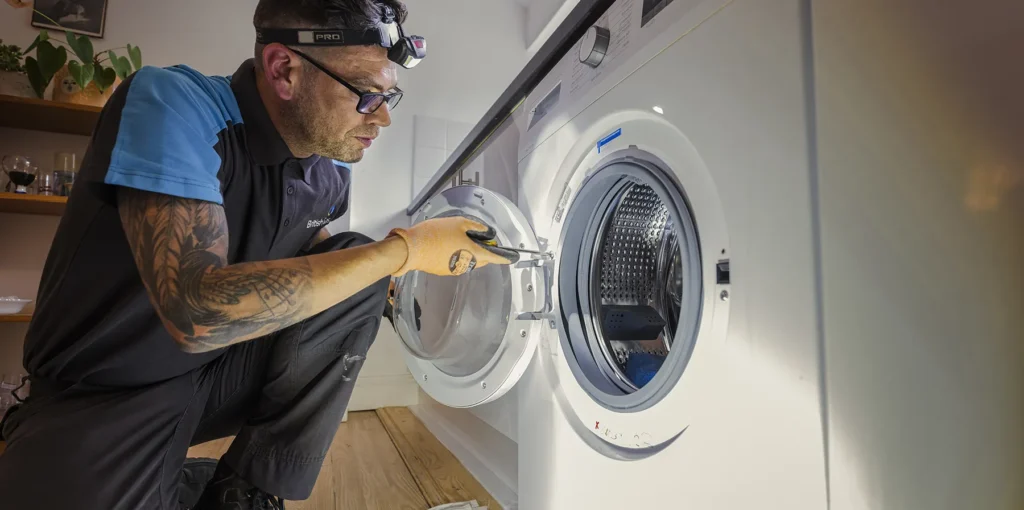
Understanding the mechanical pathways inside your washing machine not only solves the mystery of the missing socks but also reveals why small garments can accidentally cause major appliance failures.
The Engineering Mechanics of a Washing Machine Drum
To understand how a sock manages to escape the wash cycle entirely, you have to look at how modern laundry equipment is constructed.
1. The Gap Between the Outer Tub and Inner Basket
In a front-load washing machine, the stainless steel inner drum (where you place your clothes) spins freely inside a stationary outer plastic tub filled with water. To allow the drum to spin without scraping the outer walls, a narrow gap exists around the entire perimeter.
While heavy towels and jeans are far too bulky to slip through this space, small, flexible items like infant socks, underwear, and thin handkerchiefs can flatten out under high-speed agitation.
2. The Role of High-Speed Spin Cycles
During the final extraction phase, a washing machine spins at speeds between 1,000 and 1,400 RPM. This creates powerful centrifugal force, pushing water and lightweight fabrics outward against the drum perforations. If a small sock slips edge-first through one of the larger drainage holes in the drum wall, the centrifugal force and water current can pull it completely through into the outer plastic tub.
Once trapped between the inner and outer drums, the sock slides downward due to gravity, settling into the lowest point of the system: the outer tub sump and the drain pump filter.
What Happens to Trapped Socks Inside the Machine?
Unlike lint or dissolved detergent residue, a stray sock cannot easily pass through the narrow drainage ports that lead out to your household plumbing. Instead, it creates localized mechanical problems:
- Drainage Blockages: As multiple small garments or single socks accumulate in the lower outer tub, they drift downward and block the entrance to the drain hose. This triggers sudden drainage failures, leaving your machine full of standing water.
- Impeller Lockouts: If a stray sock manages to slip past the lower rubber hose and reaches the drain pump itself, it wraps tightly around the magnetic impeller blades. The pump motor stalls, overheats, and can burn out permanently.
- Friction and Odor: Trapped organic fabrics sitting in warm, stagnant wash water quickly become breeding grounds for bacteria and mold, causing persistent musty odors that linger even after running cleaning cycles.
How to Prevent Small Items from Escaping
Fortunately, you do not have to live in fear of losing your favorite footwear to your appliance’s internal machinery. A few simple habits will keep your laundry secure:
- Use Mesh Laundry Bags: Always place socks, undergarments, and delicate baby clothes inside a zippered mesh lingerie bag before tossing them into the wash. This keeps small items contained while still allowing water and detergent to circulate freely.
- Inspect the Door Seal Regularly: In front-loaders, check the folds of the rubber door gasket after every wash. Small socks frequently wedge themselves into the lower folds of the seal without dropping into the drum gap.
- Clean Your Drain Filter Periodically: If you notice your washing machine is draining slowly or frequently leaving clothes soaking wet, check the lower service panel filter. You might just recover a few long-lost socks!
For specialized guidance on keeping your laundry equipment operating smoothly, exploring professional home appliance repair insights can help you protect your investment.
When Missing Items Indicate a Deeper Mechanical Problem
While finding a stray sock in the filter is a common DIY fix, persistent noises, leaks, or recurring drainage failures often point to underlying hardware wear. If your machine is shaking violently or grinding during operation, professional washing machine repair is essential to inspect internal drum alignments and bearings.
To explore the full spectrum of technical solutions available for your household, reviewing our services can help you understand how structured maintenance keeps your entire kitchen and laundry ecosystem running seamlessly. Contact us at FixFast LLC today for fast, dependable appliance repair across Dubai.
Frequently Asked Questions
Can a missing sock really break my washing machine? Yes, if a stray sock slips into the drain pump or blocks the pressure chamber hose, it can cause complete drainage failures, error codes, or burn out the drain pump motor.
How do socks get past the washing machine drum? Small, flexible garments can slide edge-first through the drainage holes in the inner drum during high-speed agitation or high-RPM spin cycles.
Where should I look if I think a sock is stuck in my washer? First, check the rubber door gasket folds (on front-loaders). If it’s not there, open the small service panel at the bottom front of the machine to inspect and clean the drain pump filter.
Do top-load or front-load washing machines lose more socks? Front-load washers are slightly more prone to trapping small items in the door seal and outer tub gap due to their tumbling motion, whereas top-loaders with agitators usually keep items confined to the central basket.
When should I call a professional technician for washing machine clogs? You should call a professional if cleaning the drain filter and checking external hoses does not resolve a persistent drainage blockage or if you hear loud mechanical grinding noises.