
Opening your dishwasher at the end of a cycle only to find your dishes bone-dry and covered in food residue is a frustrating experience. A dishwasher that refuses to fill with water cannot clean your cookware, leaving you with a tedious hand-washing chore.
When a dishwasher fails to fill, the root cause usually points to a restricted water supply, a malfunctioning inlet valve, or a tripped safety switch. For homeowners and tenants in Dubai, understanding how to safely troubleshoot these components can save you time and money. While some minor supply blockages can be checked independently, electrical and mechanical failures require professional home appliance repair.
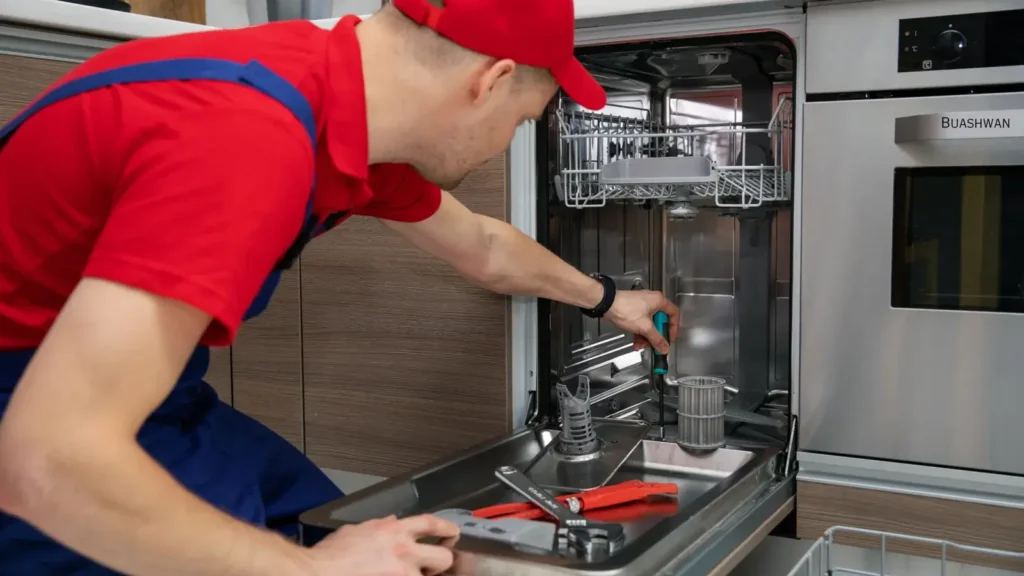
Common Reasons Why a Dishwasher Won’t Fill
Before assuming your appliance is completely broken, it helps to understand the electromechanical sequence that brings water into the tub. When you start a cycle, the electronic control board signals the water inlet valve to open, allowing pressurized water to flow through a supply hose into the machine until a float switch signals that the correct water level has been reached.
If water fails to enter, one of the following issues is usually to blame:
1. The Water Supply Valve Is Closed or Kinked
Sometimes the fix is entirely external. If the water supply valve under your kitchen sink was accidentally bumped closed during cleaning, or if the braided stainless-steel supply hose behind the machine is sharply kinked or crushed, water cannot reach the dishwasher inlet.
2. A Clogged Water Inlet Valve Screen
The water inlet valve features a small mesh screen designed to catch mineral scale, rust flakes, and debris from the municipal water supply before they enter the machine. Over time, particularly in areas with hard water, this screen becomes completely choked with mineral deposits, choking off the water flow.
3. A Faulty Float Switch or Stuck Float Assembly
Inside the bottom of your dishwasher tub sits a small plastic dome known as the float. As water fills the basin, the float rises. Once it reaches a designated height, it triggers a microswitch to stop the water flow. If food debris gets wedged underneath the float, or if the float switch itself electrical fails, the machine may incorrectly register that the tub is already full and refuse to let any water in.
4. A Defective Water Inlet Valve
The water inlet valve is an electromechanical solenoid valve. When the control board sends an electrical current, the solenoid opens the valve. If the internal electrical coil burns out or the mechanical plunger seizes up, the valve will remain permanently shut regardless of signals from the control board.
Safe Step-by-Step Troubleshooting for Homeowners
While you should never attempt complex electrical wiring repairs yourself, you can safely perform a few initial checks before calling a technician:
- Check the Sink Shut-Off Valve: Ensure the hot water supply valve located under your kitchen sink is turned fully counterclockwise to the open position.
- Inspect the Supply Hose: Carefully pull the dishwasher forward (if accessible without pinching wires) and check that the water inlet hose is not bent, twisted, or kinked.
- Inspect and Clean the Float: Open the dishwasher and check the plastic float dome at the bottom corner of the tub. Lift it up and down manually to ensure it moves freely without sticking on accumulated food grease.
For specialized guidance on resolving complex mechanical faults, exploring professional dishwasher repair insights can help protect your kitchen infrastructure.
When to Call a Professional Appliance Technician
If checking the external supply lines and float assembly does not resolve the issue, the problem likely lies within internal components that require specialized tools and technical expertise. You should contact a professional technician if:
- The water inlet valve hums or clicks when the cycle starts, but no water enters the tub.
- Your electronic control panel flashes specific error codes related to water fill failures.
- You suspect a faulty electronic control board or a burnt-out wire harness.
Attempting to replace live electrical solenoids or high-pressure water valves without proper training can result in severe water leaks or electrical hazards. To review the full scope of technical support available for your household, checking our services ensures you have reliable professionals ready when unexpected breakdowns occur.
If your kitchen appliances are acting up, contact us at FixFast LLC for fast, dependable appliance repair and maintenance services across Dubai.
Frequently Asked Questions
Why is my dishwasher not getting any water? A dishwasher usually fails to get water because the water supply valve under the sink is closed, the supply hose is kinked, the inlet valve screen is clogged with mineral scale, or the inlet valve itself has failed.
Can a clogged filter prevent a dishwasher from filling? No, a clogged sump filter at the bottom of the tub prevents water from draining or circulating properly, but it does not stop fresh water from entering the machine at the start of a cycle.
How do I test my dishwasher’s water inlet valve? Testing an inlet valve requires a multimeter to check for electrical continuity across the solenoid terminals, as well as checking for mechanical blockages in the valve screen. This is best left to a certified technician.
Is it expensive to repair a dishwasher that won’t fill? Most filling issues are resolved by replacing a water inlet valve or clearing a blockage, which are typically straightforward and affordable repairs compared to replacing an entire machine.
When should I call a professional for dishwasher repairs? You should call a professional if the water supply line is fully open and unobstructed, yet the machine still refuses to take in water or displays persistent error codes.