
Over time, hard water can also cause problems with household appliances, including washing machines. Over time, the minerals, like calcium and magnesium, dissolved in the water can cause deposits to build up inside appliances. These deposits can build up, resulting in problems with heating, water flow, cleaning and drainage components.
In Dubai, washing machine maintenance is a crucial part of the household routine. A washing machine uses water, detergent, heat and movement in a cycle to wash clothes. Small performance problems can escalate over time, if there is mineral residue.
Learning about the impact of hard water on a washing machine will enable homeowners to identify early warning signs, effectively maintain their washing machines, and schedule professional washing machine repair in Dubai when needed.
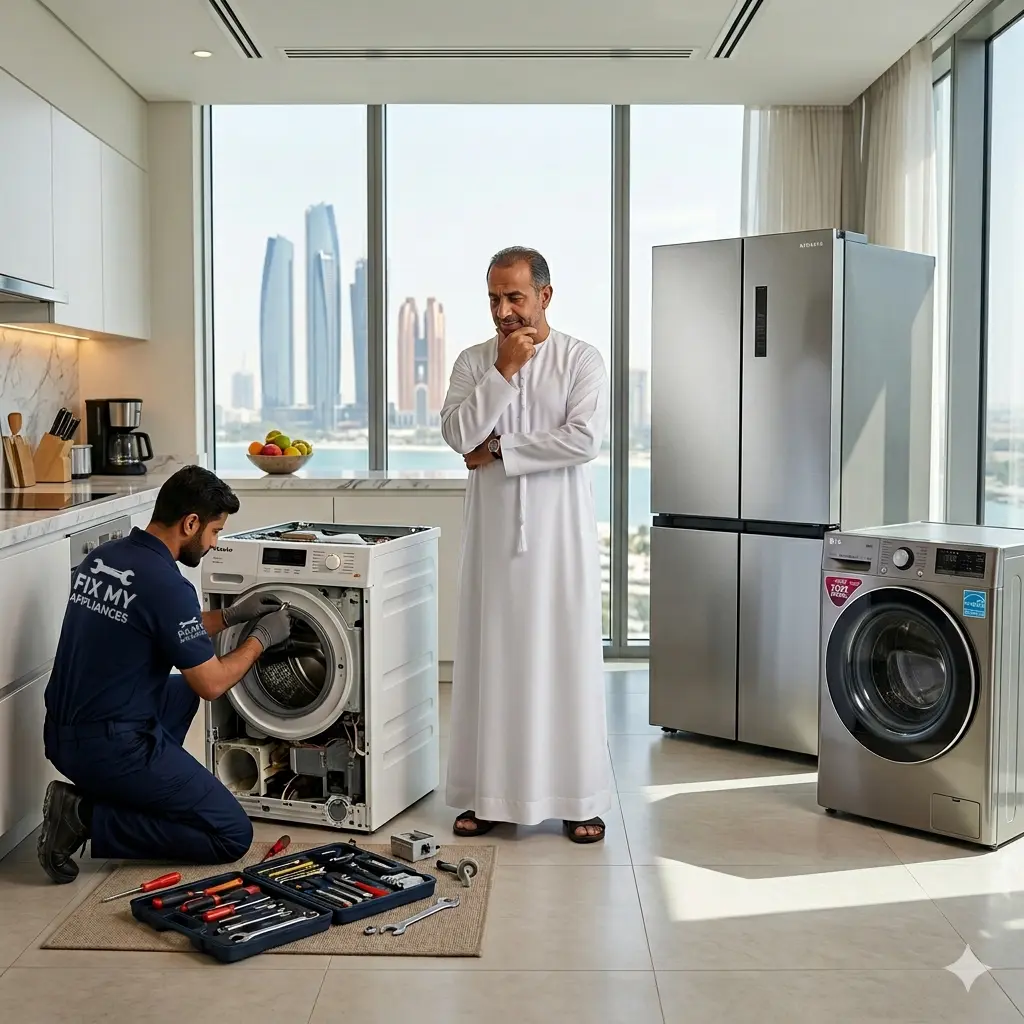
What Is Hard Water?
Hard water has a greater amount of naturally occurring minerals, such as calcium and magnesium. When the water comes to contact the geological material, it may pick up dissolved minerals prior to entering the domestic water supply.
The presence of these minerals does not indicate water quality problems. However, they could present practical issues at home. Hard water can cause deposits to form on any plumbing, appliances, laundry, and taps. Can also impact the effectiveness of detergents.
A washing machine, with repeated use of mineral rich water, can lead to scale building up on the inside of the washing machine. For instance, if your washing machine has hard water issues, you should do regular descaling, according to Bosch.
The Impact of Hard Water on a Washing Machine
Hard water typically doesn’t cause things to crack all at once but instead creeps up slowly. A washing machine can run for a long time without any problems, and deposits gradually form.
Mineral deposits can occur in various components of the appliance and over time can lead to decreased efficiency.
Limescale Can Build Up on Internal Components
Limescale is one of the primary problems of hard water. As the water with the minerals keeps flowing through the washing machine, deposits will form on the surfaces and parts.
This issue may be more apparent in areas where water is heated where dissolved minerals can precipitate out and lead to scaling. That is why components used in heating processes should be given special notice when using a washing machine in hard water.
If there is considerable scale buildup in the machine, it might take a little longer to heat the water or it might need more maintenance to keep it operating normally.
Heating Elements Can Become Less Efficient
A heating element is employed in some washing machines to heat the water in certain wash cycles.
The heating element can become surrounded by mineral deposits. The higher the buildup, the less efficient the heat transfer will be. This may have an impact on the wash cycle and possibly put a strain on the component.
It is not necessarily a hard water problem if the washing machine takes an unusually long time to heat water or is no longer setting the water to the proper temperature. Common causes of similar symptoms include electrical faults, sensor problems, heating-element failure or control-board problems.
A certified technician can accurately diagnose the issue, avoiding unnecessary part replacement.
Hard Water Can Compromise the Effectiveness of Detergents
Hard water can compromise the effectiveness of the detergents used.
The properties of hard water can also affect the performance of detergents.
Calcium and magnesium may react with the detergent ingredients, decreasing the cleaning ability and leaving behind more residue. This can mean that after a cycle, clothes aren’t as clean as you’d expect.
You might notice:
- A decline in freshness of clothes after washing.
- The detergent residue that is left in the machine.
- White or chalky deposits.
- Reduced cleaning performance.
- The odours that are generated within the washer.
Do not always put too much detergent into a water supply. Excessive use of detergent can lead to detergent residue accumulation.
Rather, follow the instructions of the detergent manufacturer and the washing machine manufacturer’s recommendations for that specific type of washing machine.
Mineral Deposits Can Influence the Operation of Water Inlet Parts
Your washing machine requires a consistent water flow for proper drum filling.
Mineral deposits may form around the water inlet parts, filters or passages. If water flow is limited, the washing machine may take longer to fill or an error message related to water flow may appear.
There can be a number of reasons for a slow water flow, such as:
- Blocked inlet filters
- Kinked hoses
- Low water pressure
- Faulty inlet valves
- Mineral deposits
- Plumbing restrictions
The symptoms may be caused by several factors, so if making basic checks does not solve the problem, professional diagnosis is recommended.
Hard Water Can Cause Drainage Issues
The primary cause of drainage issues isn’t hard water, but mineral deposits can happen in sections of the appliance and plumbing.
If the washing machine does leave water in the drum after a wash, inspect the accessible filter and drain hose (as per the washing machine manufacturer’s instructions).
If the washing machine has continued to drain issues, it’s likely that the drain pump is clogged, the hose is damaged, or the pump has failed, or there is another mechanical issue.
Drainage problems are included in the washing machine repair Dubai service provided by FixFast, as well as leaks, strange sounds, vibrations and washing machines that won’t start.
Hard Water May Be a Cause of Washing Machine Odours
When detergent residue, moisture, dirt and other deposits get trapped inside a washing machine, it can cause an odor.
Hard water can cause the residue management to be more complicated due to the possibility of mineral deposits forming with detergent residue after repeated cycles.
If the front-loading washing machine is not cleaned on a regular basis, it can be very easy to get residue around the door gasket and detergent drawer.
If it’s OK with the manufacturer, leave the door slightly open after use to allow inside to dry. Cleaning of accessible seals, detergent compartments and filters periodically will also help to maintain satisfactory hygiene.
Identifying Potential Hard-Water Issues
One fault code or symptom is not necessarily caused by hard water. However, homeowners might experience changes over time in washing machine performance.
Some warning signs are:
White or Chalky Deposits
If there are mineral deposits around water contact points, they are likely to be scales.
Reduced Washing Performance
When clothes are not washing as well with the right cycle and detergent, water quality could be a factor.
Longer Heating Cycles
If the problem persists, a machine that has difficulty heating water should be professionally serviced.
Unusual Odours
If you notice a persistent aroma, it could be from detergent residue, buildup, trapped water or as a result of the cleaning.
Water-Filling Problems
If the filling is slow or if numerous errors of water inlet are made, there is a restriction or a faulty component.
Increasing Maintenance Problems
If a number of minor problems start to appear over time, a check-up could be beneficial to determine if the mineral formation is a cause or something else is the cause.
The Best Way to Protect Your Washing Machine From Hard Water
One of the easiest ways to limit the damage mineral deposits can cause is to perform regular maintenance.
Follow the Manufacturer’s Descaling Recommendations
There are some differences in the maintenance requirements for various washing machines. Always follow the instructions given for your particular model.
Some manufacturers advise using products for washing machine descaling on a regular basis. For instance, if a machine is exposed to hard water, Bosch advises regular descaling.
Remove Dirt From the Accessible Filters
Refer to the user manual to determine filters that can be accessed and cleaned by the homeowner.
A blocked filter may impact water flow and drainage, but not all blocked filters are a result of hard water.
Avoid Excessive Detergent
The more detergent you use the cleaner your clothes will not be. Too much detergent will leave a film in the machine and on the cloth.
Follow the detergent instructions for use, load and washing machine.
Avoid Overloading the Washing Machine
If you are an avid user of the machine, avoid overloading it.
Overloading the washing machine could cause it to have difficulty with washing and spinning. Dubai Electricity and Water Authority also suggests running washing machines with full loads for maximum efficiency of water, energy and detergent.
But even with a “full load” the capacity of the manufacturer must still be exceeded.
Schedule Professional Maintenance as Necessary
If mineral deposits have caused the problem, it may be necessary to clean more frequently than is recommended.
A professional technician can check out the parts to find out if the problem is scale, mechanical wear, electrical issues, or parts that are clogged or another problem.
When Should You Repair or Replace a Washing Machine That Has Been Affected by Hard Water?
Not all hard water is an indication that the washing machine needs to be replaced.
This depends on the age, condition, and repair needs of the machine, parts availability and total cost.
One broken part in a relatively new washing machine can be fixed. However, if the appliance is older and having a number of major issues, the repair/replace decision may need to be more thoroughly considered.
Professional diagnosis can help, since replacing an appliance solely on the basis of symptoms may prove to be a costly way to deal with the issue.
When to Hire a Washing Machine Repair Service Technician?
If any of the following apply to the machine, you should think about getting professional help:
- Stops working unexpectedly
- Does not drain properly
- Does not become waterlogged.
- Makes odd noises when operating.
- Leaks during operation
- Fails to spin
- Fails to heat water properly
- Does not return error codes that persist for long periods of time
- Vibrates excessively
- Continues to have issues following cleaning and simple repairs
Technicians from FixFast LLC offer washing machine repair services in Dubai, identifying problems such as vibration, leakage, strange noises, starting and drainage issues.
Don’t jump to the conclusion that the hardness of the water caused whatever the issue is, a thorough inspection will reveal the true cause and which repair is needed.
Professional Washing Machine Repair Can Help
The scope of a professional repair goes beyond the mere replacement of a broken part. Correct diagnosis is essential as many different faults can give a similar appearance.
A washing machine might block the filter, have a blocked hose, have a malfunctioning pump, or a problem with the pump motor, for instance. Likewise, if your machine won’t start, you may have a problem with the power supply, door lock, wiring, control board, or another problem.
A technician will be able to check the appliance systematically and identify which part is causing the problem.
This can help to minimize unnecessary parts replacement and get to the root cause.
Final Thoughts
Over time, hard water can cause mineral deposits and film to build-up inside a washing machine. This can impact over time over water flow, water heating, water cleaning and overall appliance functioning.
But not all washing machine issues are related to hard water. Many causes of drainage failure, leak, abnormal noises, vibration and starting problems exist.
You can help keep your appliance operating properly by regularly cleaning, using an appropriate detergent, descaling as recommended by the manufacturer and by letting it be inspected every so often by a professional.
If your washing machine is already a bit of a hassle to use, you can call in the help of a washing machine repair service in Dubai and have them check out the issue before it escalates into a higher repair bill.
Frequently Asked Questions
Are Washing Machines Affected by Hard Water?
Hard water may lead to mineral deposits and limescale build-up inside appliances. This accumulation can impact the functioning of some components and appliances over time.
When Do I Need to Clean My Washing Machine?
This will vary based on your washing machine, water quality, frequency of use, and manufacturer’s recommendation. Follow the instructions for maintenance provided for the particular model.
Does Hard Water Reduce the Cleanliness of Clothes?
Yes. Hard water can also cause problems with detergents that may lead to residues in the laundry, impacting on the feel and performance of the laundry after washing.
Will a Washing Machine Fail if It Has Hard Water?
While hard water may be a factor in component issues, complete failure can occur for numerous reasons. Drainage, water supply, control system and electrical and mechanical faults should also be taken into consideration.
Should Limescale Build-Up in a Washing Machine Be Repaired?
In some cases, yes, depending on the age, condition and parts of the machine that are affected. A professional inspection will be able to identify which is the most viable solution – repair or replaced.
What Should I Look for in My Washing Machine to Get Professional Washing Machine Repair?
If you experience any of these issues, including persistent leaks, drainage problems, unusual noises, excessive vibration, failure to start, heating problems, spin-cycle problems and recurring error codes, you should schedule a professional inspection.
Is It Possible to Avoid Hard Water Problems if Regular Maintenance Is Provided?
Regular cleaning and manufacturer’s recommended descaling can help to prevent mineral deposits and residues. While maintenance doesn’t eliminate all faults, it can lead to better performance of the appliances and identify any potential issues earlier.
Conclusion
While hard water may affect washing machine performance, routine maintenance becomes particularly beneficial when mineral deposits are a worry. Filters and accessible areas should be kept clean, use the manufacturer’s descaling instructions carefully, never use too much detergent and deal with unusual symptoms as soon as possible to keep your appliance protected.
If maintenance isn’t sufficient, FixFast LLC has the knowledge to identify and resolve washing machine issues in Dubai. Professional inspection will enable the true cause of the defect to be determined and then the right repair to be made.