
Residents in Dubai often face a common household challenge: hard water. Over time, a high mineral content in your water supply can silently damage your appliances. At FixFast LLC, we frequently see the devastating effects of water hardness on laundry machines. Understanding how to manage this issue can improve your appliance performance and save you from costly, unexpected breakdowns.
What Is Hard Water and Why Does It Affect Washing Machines?
Hard water is water that contains high levels of dissolved minerals, specifically calcium and magnesium. When this mineral-rich water is heated inside your washing machine, the minerals crystallize and adhere to the internal components. According to the U.S. Geological Survey (USGS), when hard water is heated, solid deposits of calcium carbonate form, which can drastically reduce equipment efficiency and shorten the lifespan of household appliances.
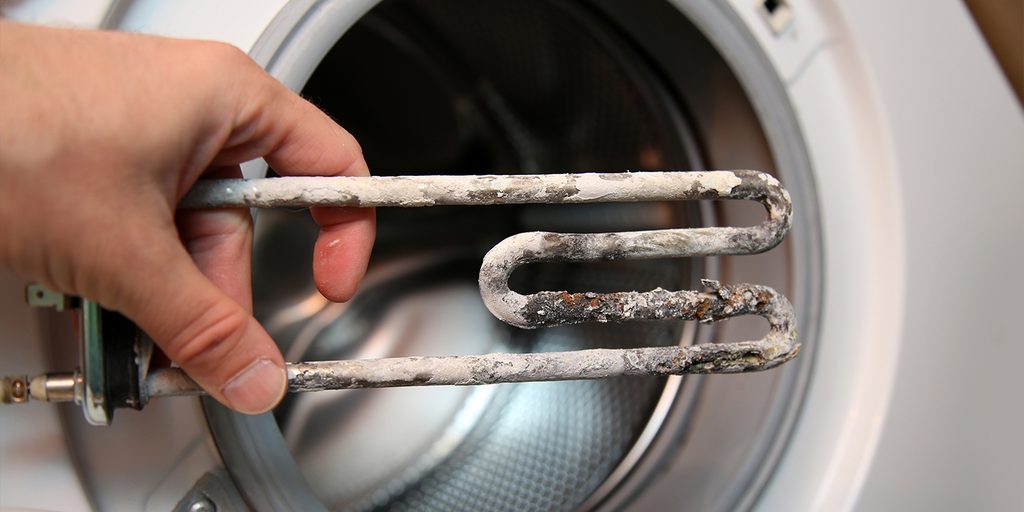
What Is Limescale Buildup?
What is limescale in a washing machine? Limescale is a hard, chalky, off-white deposit formed by the calcium carbonate found in hard water. In a washing machine, limescale settles heavily on the heating element, the water filter, and the outer drum, slowly reducing the machine’s ability to heat water and clean clothes efficiently.
Signs Your Washing Machine Has Limescale
- White, chalky residue left on dark clothing after a wash.
- A persistent, damp, or foul odor inside the drum.
- The washing machine takes noticeably longer to heat up.
- You need to use more detergent than usual to get clothes clean.
- Visible white crust forming on the rubber door seal or inside the detergent drawer.
How Hard Water Can Affect Washing Machine Performance
How does hard water damage a washing machine? Hard water damages washing machines by coating the internal heating element in a thick layer of scale. This forces the heater to work harder and longer, which eventually causes it to burn out.
Furthermore, rough mineral deposits create friction inside the machine. Over time, this friction can degrade bearings, leading to a broken washing machine drum or damaged rubber door seals. Limescale also traps detergent residue and fabric softener, creating a breeding ground for mould and bacteria that completely ruins your overall appliance performance.
How to Prevent Limescale in Your Washing Machine
How can I prevent limescale buildup in my washing machine? You can prevent limescale buildup by using a high-quality water softener, adding a descaling agent to your wash routines, and running regular maintenance washes.
- Use water softening tablets: Add a water softening tablet or powder to your detergent drawer with every wash cycle to neutralize the minerals.
- Run a monthly hot wash: Run an empty cycle at 90°C with a dedicated washing machine descaler once a month to flush out developing scale.
- Clean the drawer and filter: Remove and wash the detergent drawer in warm soapy water, and regularly clear the debris filter to maintain proper water flow.
Washing Machine Maintenance Tips for Dubai Homes
Because the municipal water supply in the UAE naturally contains dissolved minerals, proactive washing machine cleaning and maintenance is essential for Dubai homes. Aside from regular descaling, always leave the washing machine door slightly open after a cycle to allow the interior to dry, which prevents mould growth. If you are ever unsure about your machine’s internal condition, exploring professional appliance repair services can help you catch minor scale issues before they turn into major mechanical failures.
When Should You Call a Washing Machine Repair Technician?
When does a washing machine need professional repair? A washing machine needs professional repair if it stops heating water entirely, leaks from the door, makes loud grinding noises during the spin cycle, or fails to drain. If regular descaling does not improve the machine’s functionality, it is time to call an expert for home appliance repair in Dubai before the motor or heating element fails completely.
Frequently Asked Questions
How often should I clean a washing machine affected by hard water? You should clean and descale your washing machine at least once a month. Regular monthly maintenance prevents severe calcium buildup and keeps the internal heating element working efficiently.
Can limescale cause a washing machine to stop working? Yes, severe limescale can cause a washing machine to break down. Thick scale can burn out the heating element, block the water pump, or damage the drum bearings, stopping the wash cycle completely.
Are vinegar and baking soda safe for washing machine cleaning? Yes, white vinegar and baking soda are safe, natural alternatives for mild descaling. However, commercial descalers are generally much more effective for breaking down heavy mineral deposits.
Does hard water fade clothing? Yes, hard water can make fabrics look dull and stiff. Mineral deposits trap dirt and un-dissolved detergent residue inside the fabric fibers, which fades dark colors and turns white clothes gray over time.
Why does my washing machine smell bad? A bad smell is usually caused by a mixture of trapped limescale, leftover detergent residue, and bacteria thriving in the damp environment. Descaling and running a hot empty wash will eliminate the odor.
Is your washing machine struggling to clean properly, making strange noises, or failing to heat up? Don’t wait for a complete breakdown. Contact FixFast LLC today for expert appliance maintenance Dubai residents trust, and let our skilled technicians restore your washing machine to peak performance.