
In commercial buildings, industrial complexes, and large-scale residential facilities across Dubai, large-scale HVAC setups rely heavily on industrial chillers to maintain stable indoor temperatures. Unlike standard split units or domestic air conditioners, a chiller system manages massive thermal loads by circulating chilled water or glycol through an extensive network of air handling units (AHUs) and fan coil units (FCUs).
When a commercial chiller malfunctions, the impact is felt across the entire building, leading to uncomfortable indoor environments and potential operational downtime. Diagnosing and repairing a complex chiller system requires a structured, engineering-led approach. This guide explores the core diagnostic procedures, common failure points, and professional repair protocols necessary to restore system efficiency.
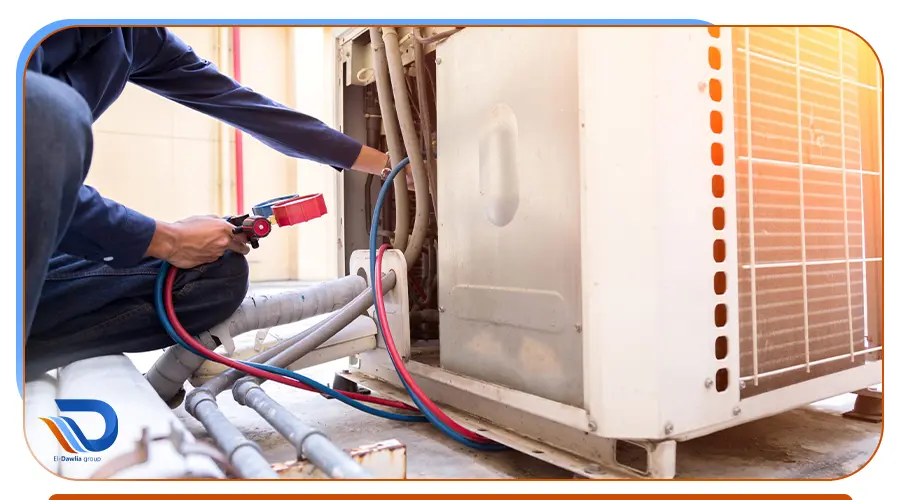
The Role of Chilled Water Systems in Large Facilities
Chillers operate on the principles of vapor-compression or absorption refrigeration. Instead of cooling air directly like a traditional direct-expansion (DX) system, a chiller cools water or a water-glycol solution. This chilled fluid is then pumped through pipes to remote heat exchangers or cooling coils throughout the building.
Because these systems run continuously under heavy thermal stress, minor faults in the refrigerant circuit, water pumps, or electrical controls can quickly cascade into major system lockouts. Proper troubleshooting requires isolating the problem into distinct mechanical sub-systems: the compressor, the condenser, the evaporator, and the hydraulic fluid loop.
Step 1: Systematic Chiller Diagnostics
Effective troubleshooting begins long before any tools touch the equipment. Certified technicians rely on a methodical diagnostic workflow to pinpoint the root cause of a failure.
1. Reviewing System Error Codes and Controller Logs
Modern chillers are equipped with sophisticated microprocessor control panels that monitor temperatures, pressures, flow rates, and electrical loads. When a fault occurs, the controller logs an error code. Technicians start by interrogating these logs to identify whether the system shut down due to low refrigerant pressure, high discharge temperatures, a water flow switch trip, or an electrical phase imbalance.
2. Evaluating Refrigerant Pressures and Superheat
By attaching digital manifold gauges to the service ports, technicians check the operating pressures of the refrigerant circuit. Abnormal high-side or low-side pressures immediately indicate issues such as fouled condenser tubes, non-condensable gases in the system, or restricted expansion valves. Measuring superheat and subcooling values helps determine if the chiller is operating with an optimal charge.
3. Inspecting Water Flow and Hydraulic Loops
Because chillers rely on continuous fluid movement, hydraulic blockages or pump failures will trigger flow safety switches. Technicians inspect the chilled water pumps, strainers, and flow meters to verify that water is circulating at the correct volumetric flow rate and pressure differential.
Common Chiller Failures and How They Occur
Understanding what typically goes wrong helps facility managers recognize when professional intervention is required.
- Fouled Condenser Tubes: In water-cooled chillers, condenser water is drawn from cooling towers, carrying minerals, algae, and suspended dust. Over time, these minerals scale the inside of the condenser tubes, insulating the metal and preventing heat rejection. This causes head pressure to spike, eventually tripping the high-pressure safety switch.
- Low Refrigerant Charge or Leaks: If a chiller develops a micro-fracture in its brazed joints or tubing, refrigerant slowly escapes. This leads to evaporator freezing, reduced cooling capacity, and low-pressure lockouts.
- Compressor Electrical Faults: Commercial compressors draw massive electrical currents. Worn contactors, loose wiring terminals, or voltage fluctuations can cause internal motor windings to overheat, tripping circuit breakers or damaging the motor.
- Water Flow Interruptions: Malfunctioning chilled water pumps, air pockets in the piping network, or clogged Y-strainers can restrict water flow, causing the evaporator barrel to freeze and crack.
Professional Repair Protocols
Repairing a commercial chiller goes far beyond quick temporary fixes. It requires specialized tools, heavy-duty rigging equipment, and precise technical execution.
- Chemical Descaling and Tube Cleaning: To restore heat transfer efficiency in fouled condensers, technicians circulate specialized chemical descaling solutions through the closed tube bundles to dissolve calcium scale and biological slime.
- Sealed System Leak Repair and Recovery: If a refrigerant leak is detected, the remaining refrigerant must be safely recovered using certified recovery machines. Technicians then locate the puncture using electronic leak detectors or nitrogen pressure testing, braze the damaged copper lines, evacuate the system to remove moisture, and recharge it with the exact manufacturer-specified refrigerant weight.
- Electrical Overhaul: Replacing burnt contactors, calibrating overload relays, and testing control board logic ensures that the compressor receives stable, balanced power without electrical surging.
The Value of Preventive Maintenance
Waiting for a chiller to break down completely during peak summer months is a costly gamble. Implementing a proactive maintenance schedule—including seasonal tube brushing, oil analysis, water treatment monitoring, and electrical calibration—drastically reduces the risk of emergency shutdowns. According to the U.S. Department of Energy (DOE), maintaining commercial HVAC systems through proper water treatment and coil cleaning significantly improves thermal efficiency and extends equipment life.
To explore how comprehensive commercial cooling care integrates with everyday property management, reviewing our services can help you understand the scope of professional support available. Whether you need specialized AC maintenance, targeted AC repair, comprehensive home appliance repair, or expert diagnostics, maintaining a structured service plan is vital. If your facility is facing an unexpected cooling issue, contact us at Al Karama Technical LLC for dependable assistance across Dubai.
Frequently Asked Questions
Why does my commercial chiller keep tripping on low pressure? A low-pressure trip typically indicates a restricted liquid line filter drier, a failing expansion valve, or a low refrigerant charge caused by a system leak.
How often should chiller condenser tubes be cleaned? Condenser tubes should generally be mechanically or chemically cleaned at least once a year, or more frequently if operating in harsh environments with heavy mineral deposits or dust exposure.
Can a chiller operate with low water flow? No, operating a chiller with restricted water flow will cause the evaporator temperature to drop below freezing, risking a catastrophic freeze-up and cracking of the internal chiller barrel.
What is the difference between an air-cooled and a water-cooled chiller? Air-cooled chillers reject heat directly to the ambient outdoor air using fans, whereas water-cooled chillers use a secondary cooling tower circuit to reject heat via evaporation, making them generally more efficient for large-scale buildings.
When should a chiller compressor be replaced versus repaired? If a compressor suffers from catastrophic mechanical internal seizure or electrical winding burnout, a full compressor replacement is usually required, whereas electrical terminal or valve issues can often be repaired on-site.