Ask a washing machine technician how their week is going, and the honest answer is rarely about motors or belts. It’s usually about whatever they pulled out of a drain pump filter that morning.
Every appliance repair company builds up a mental catalogue of the strange, the sentimental, and the genuinely baffling things that end up trapped somewhere inside a washing machine. Some of it is funny. Some of it explains exactly why a machine stopped working in the first place. A washing machine repair in Dubai call almost always starts with a symptom, but it often ends with a technician holding up something nobody expected to see again.
None of this is trivia for its own sake either. Every category on this list below tends to correlate with a specific, recognizable fault, which means an experienced technician can often guess what they’re about to find the moment a customer describes the symptom over the phone.
Coins and Keys: The Classics
If there’s a hall of fame for objects found in washing machines, coins and keys sit at the top of it, and for good reason. They’re small enough to slip past a quick pocket check and heavy enough to cause real damage once they’re loose in the drum.
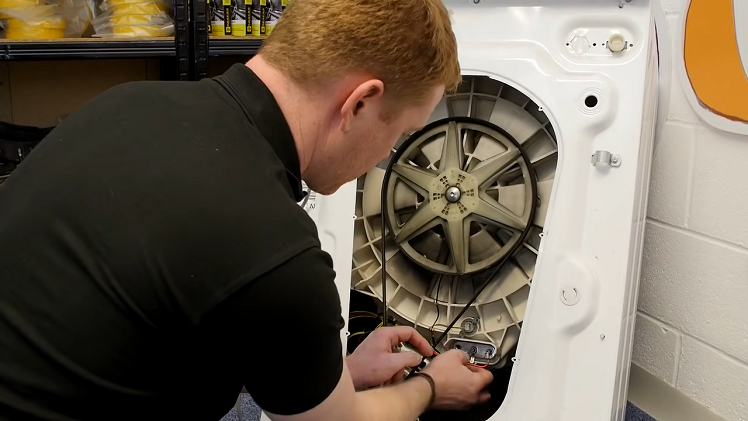
According to James Peters, a Kenmore laundry product manager quoted by Reader’s Digest, coins can damage the fins on a drain pump if they slip past the filter, and in worse cases they can even crack the glass on a front-loading door. Keys carry their own separate risk. Beyond the obvious inconvenience of losing them mid-wash, their sharp edges can scratch the drum, and any keyless entry fob among them rarely survives a full cycle intact.
The fix sounds almost too simple to be the actual answer, and yet it is: emptying pockets before the wash starts. Technicians will say this more often than almost anything else, mostly because it’s the one habit that would eliminate a meaningful share of their callouts entirely.
The pattern is consistent enough that some technicians can guess the household routine just from where the coins turn up. A drum full of loose change usually means someone’s washing work uniforms or jeans straight off the body without a second glance at the pockets first, a habit that’s easy to fall into and just as easy to fix once it’s pointed out.
Jewelry That Technicians Learn to Set Aside Carefully
Rings, earrings, and the occasional watch turn up often enough that most technicians know to check the drain trap slowly rather than clearing it in one careless motion.
The emotional stakes here are different from a lost coin. A wedding ring that slipped off during laundry, or a pair of earrings that fell out of a jewelry box left on top of a hamper, matters in a way a stray key never does. Experienced technicians tend to develop a habit of checking the filter contents by hand before disposing of anything, precisely because they’ve handed a stunned customer their own wedding ring often enough to know it’s worth the extra thirty seconds.
Rings in particular have a habit of ending up nowhere near where they were lost. A ring that slips off during handwashing at the sink can travel through the drain system entirely, only to resurface days later during an unrelated repair on a completely different part of the machine. Weight loss during Ramadan or a hot summer is a quieter, less obvious cause too, since rings that fit comfortably for years can suddenly slip off unnoticed once fingers thin out even slightly.
Underwire Bras and the Hardware Nobody Thinks About
Clothing itself sometimes contributes the strange object, not just whatever was left in a pocket.
Underwire from bras is a genuine, recurring source of technician stories. The wire can work its way out of the fabric during a wash cycle, then get caught in the drum’s perforations or work its way into the pump area, where it behaves almost exactly like a stray piece of metal wire, because that’s precisely what it is. Bra hooks, jean rivets, and zipper pulls cause smaller versions of the same problem, catching on drum holes or seals rather than causing a full blockage, but wearing down the rubber seal over months of repeated contact.
The Sock Mystery, Solved by the People Who Actually Find Them
Every household jokes about the washing machine eating socks, and the joke turns out to be backed by more research than most people realize.
A study commissioned by Samsung found that the average person loses roughly 1.3 socks a month, adding up to more than 15 a year, and around 84 million socks disappearing across the UK alone every single month. Technicians who actually open up a machine’s drum, hose, and seal area during a repair see exactly where a share of those missing socks end up: wedged behind a drum baffle, caught in a door seal fold, or tangled inside a duvet cover that got zipped closed mid-wash.
It’s rarely one dramatic disappearance. It’s usually a small gap in the machine’s own architecture, the same gap, working the same way, load after load, for years without anyone noticing until a technician finally takes the drum apart.
The pattern holds up well enough that some technicians treat a customer’s sock complaint as a genuine diagnostic clue rather than a joke. A household that’s been steadily losing socks for months, with no obvious cause, sometimes turns out to have a small tear in the drum seal, exactly the kind of gap that swallows a sock but never quite lets go of it.
Small Toys, Pacifiers, and Other Things Kids Contribute
Households with young children produce their own distinct category of finds, and it’s rarely intentional laundering.
Small toys, pacifiers, hair clips, and the occasional crayon all make their way into a wash cycle by riding along in a pocket or getting balled up inside a piece of clothing nobody checked closely enough. Crayons are a particular favorite of technicians’ worst stories, since a crayon that melts during a hot cycle doesn’t just cause a mechanical problem. It coats an entire load of laundry in wax that has to be treated before anything in that batch is wearable again.
Building blocks and small figurines cause a quieter version of the same issue. They’re usually too large to reach the pump, but small enough to lodge between the drum and the outer tub, where they create a persistent knocking sound that customers often describe as a mechanical fault long before anyone suspects a toy is the actual cause.
When It’s Actually a Living Thing
Every so often, the strange find isn’t an object at all. It’s alive, or was recently.
Insects are the most common version of this, especially in a warm climate where cockroaches and small bugs occasionally make their way into an appliance’s warm, damp interior between uses. Less commonly, a small pet, usually a cat drawn to a warm, enclosed space, gets shut inside a machine before a wash starts, which is precisely why checking the drum before closing the door is worth doing as a habit rather than an afterthought, regardless of how routine laundry day feels.
What Happens When Something Actually Blocks the Drain
Not every object found inside a washing machine is a funny story. Some of them explain exactly why a machine stopped draining or started making an unfamiliar noise.
Small, hard objects that make it past the filter tend to settle in the drain pump or hose, where they can clog the passage entirely or damage the pump’s internal fins, according to guidance from Roto-Rooter. A blocked drain path is one of the more common reasons a machine that used to run fine suddenly won’t finish a cycle, and the object causing it is often something as small as a single button or a bent bobby pin.
This is also where a technician’s job gets more technical than most customers assume. Finding the blockage is only step one. Confirming the pump and hose weren’t damaged in the process, and that the fix will actually hold, is the part that separates a lasting repair from one that fails again within a month.
A blockage that’s ignored for too long tends to compound. What starts as a single trapped object can trap lint, hair, and detergent residue around it over successive washes, turning a five-minute fix into a full pump disassembly by the time a technician actually gets to it.
Pens, Chapstick, and the Stains Nobody Saw Coming
Not everything found inside a machine causes mechanical damage. Some of it just ruins an entire load of laundry in the process.
A forgotten pen or a stick of chapstick left in a pocket can melt or burst during a hot wash, spreading ink or wax across everything in the drum at once. Unlike a coin or a key, these items rarely damage the machine itself. The real cost shows up in the laundry basket, not the repair bill, which is exactly why technicians will often mention pocket-checking in the same breath whether the actual callout was mechanical or not.
Lipstick and makeup items cause a near-identical problem, usually worse, since the pigment stains fabric more stubbornly than ink does. In both cases, the drum itself is usually fine. It’s everything that shared the wash with the offending item that pays the price.
Phones, Wallets, and the Panic That Follows
Every technician has a story about the call that starts with someone describing, in a very specific tone of panic, exactly which phone model just went through a full wash cycle.
Phones and wallets are less about machine damage and more about the sheer inconvenience of the loss. A phone that makes it through a cold wash sometimes survives if it’s rescued and dried quickly enough. One that goes through a hot cycle rarely does. Either way, the story tends to follow the same arc: a moment of dread when the missing item is remembered, a frantic pause of the machine mid-cycle, and a technician’s honest but not always welcome assessment of what’s actually salvageable.
Wallets present their own quieter problem even when the leather survives. Cards left inside can warp, and any cash inside comes out looking like it’s been through considerably more than a laundry cycle, which it has.
When It’s Not an Object at All
Some of the strangest finds aren’t objects that fell into a pocket by accident. They’re the slow buildup that happens simply from regular use over time.
Pet hair collects in filters and seals faster than most owners expect, especially in households with a dog or cat that sheds heavily. Lint does something similar, and while it’s more commonly associated with dryers, it builds up in washer-dryer combo units the same way. The scale of that risk is worth taking seriously: dust, fiber, and lint were the leading items first ignited in clothes dryer fires, according to a residential fire report from the U.S. Fire Administration. A combo unit that isn’t cleaned regularly carries the same risk in a single, compact machine. Anyone running one should treat dryer repair in Dubai callouts as seriously as washer issues, since the two systems share more risk than most people assume.
Detergent residue and mineral buildup round out this category, less dramatic than a lost ring but far more common. Both accumulate quietly around seals and hidden compartments, and both are usually invisible until a technician actually opens the machine up during an unrelated repair and finds a layer that’s clearly been building for months.
What This Means for How Technicians Actually Work
None of this is really about odd stories for their own sake. Every strange find changes how a technician approaches the actual repair.
A blocked drain from a lost coin gets diagnosed differently than one caused by a worn pump, even though both can look identical from the outside. A machine full of melted crayon wax needs a different cleaning approach than one with a straightforward mechanical fault. Technicians who’ve seen enough of these cases build a kind of pattern recognition that speeds up diagnosis considerably, which is part of why Fix Fast’s full range of appliance repair services leans on experienced hands rather than a generic checklist applied the same way to every callout.
That pattern recognition shows up in small ways during an actual visit. A technician who hears a specific rattle over the phone can often narrow down the likely cause before ever touching the machine, purely from having heard that same rattle attached to the same cause dozens of times before across different homes and different brands.
That experience matters just as much on the technician side as the story side. Fix Fast’s certified technicians aren’t just trained to fix what’s broken. They’re trained to recognize what actually caused it, which is usually the difference between a repair that lasts and one that’s back on the schedule within a few weeks.
Frequently Asked Questions
What’s the most common object technicians find stuck in washing machines? Coins and keys, by a wide margin, mostly because they’re small enough to slip past a quick pocket check and heavy enough to cause real mechanical damage once they’re loose inside the drum.
Can a lost item actually damage my washing machine? Yes. Hard, small objects like coins, keys, and buttons can damage the drain pump, block the hose entirely, or in some cases even crack a front-loading door’s glass panel.
Is it true that washing machines cause socks to disappear? Not literally, but the pattern is real. Socks tend to slip behind drum baffles, get caught in door seals, or end up trapped inside other items like duvet covers rather than vanishing outright.
What should I do if I hear something rattling inside my machine during a cycle? Stop the cycle and check pockets and the drum before running it again. A rattling sound usually means a hard object is loose inside, and continuing the cycle risks pump or drum damage.
Do washer-dryer combo units have different risks than separate machines? Yes, particularly around lint buildup, since the same compact unit handles both washing and drying without the separation that makes lint easier to manage in standalone machines.
Should I call a technician if I’ve lost something valuable in the machine? Yes, especially for jewelry. A professional can access the drain trap and pump area properly, which gives a far better chance of recovery than attempting it without the right tools.
Can underwire from a bra really damage a washing machine? Yes. Loose underwire behaves like any other piece of stray metal wire once it works free of the fabric, capable of catching in drum holes or making its way into the pump area.
How often should I check or clean the drain filter myself? Roughly once a month for an average household is a reasonable habit, more often for households with kids, pets, or anyone who regularly forgets to check pockets before laundry.
The Real Lesson Behind the Strange Stories
Every strange object a technician pulls out of a washing machine is really just evidence of how much can go unnoticed in an ordinary laundry routine. Most of it is harmless. Some of it explains a repair call perfectly. All of it adds up to the same practical advice technicians repeat more than anything else: check pockets, check seals, and call someone experienced the moment something starts sounding different than usual.
Fix Fast’s technicians have opened up enough drums and drain traps to know the difference between a funny story and a real warning sign, and to fix the machine properly either way. Most of what they find isn’t dramatic. It’s just proof that laundry day is a little less routine than anyone realizes until someone actually takes the machine apart.